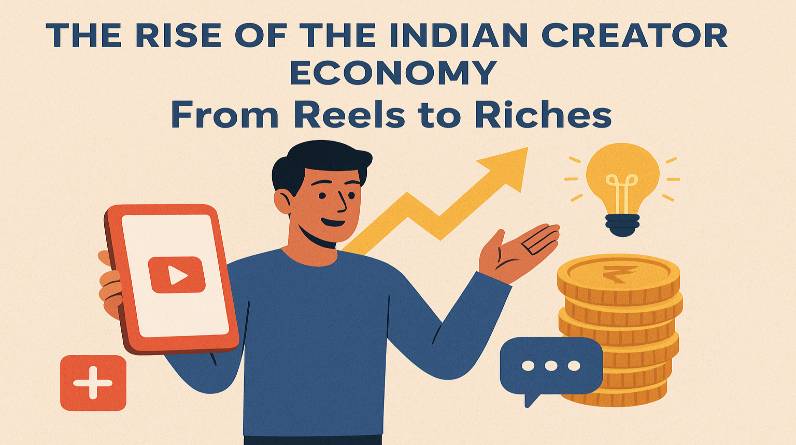
The Indian creator economy has evolved from a niche trend into one of the fastest-growing digital industries in the world. What started with short-form videos and influencer marketing has transformed into a multi-billion-dollar ecosystem where creators are building sustainable businesses, launching digital products, and even founding startups. The story of this evolution is not just about virality—it’s about ownership, innovation, and the creation of new economic value through creativity and technology.
From Entertainment to Enterprise
India’s creator landscape began with entertainment—funny skits, dance videos, and lifestyle vlogs that captured millions of eyeballs on platforms like Instagram, YouTube, and ShareChat. However, as audiences matured and digital consumption soared, creators realized that content alone was not a long-term asset. What emerged instead was a new generation of creator-entrepreneurs—individuals who use their digital influence to build brands, sell products, and develop platforms of their own.
According to industry estimates, India’s creator economy is projected to reach $24 billion by 2030, growing at nearly twice the global average. With over 100 million content creators across languages and categories, India is no longer simply a consumer market—it’s becoming a global hub for creative entrepreneurship.
The New Face of Entrepreneurship
The creator economy’s transformation can be best understood through a single shift: from content creation to content-driven business creation. Creators today are not just influencers; they are founders, educators, and innovators who treat their audiences as customers, not just followers.
Examples of Creator Entrepreneurship in Action
- Ankur Warikoo transitioned from YouTuber to educator, building a multimillion-rupee education and productivity ecosystem through cohort-based courses, digital templates, and best-selling books.
- Abhi and Niyu, known for their social commentary, turned their storytelling skills into owned intellectual property by launching books, educational programs, and branded content ventures.
- Ranveer Allahbadia (BeerBiceps) evolved beyond content creation into co-founding the media company Monk Entertainment, supporting other creators with business infrastructure.
These examples highlight a fundamental reality: today’s creators aren’t just chasing followers—they’re building companies.
The Monetization Challenge
Despite explosive growth, many Indian creators still face the harsh economics of platform dependency. Ad revenue and brand collaborations, once lucrative, have become increasingly unreliable due to algorithm changes and fluctuating CPMs.
| Metric | India | US/Europe |
| Average CPM (Cost per 1,000 views) | $0.50 – $2.00 | $3 – $8 |
| Platform Revenue Share | 45% – 55% to creators | 55% – 70% to creators |
| View Requirement for $1,000 | ~500,000+ views | ~100,000–200,000 views |
This disparity means Indian creators must generate 5–10 times more views to earn the same income as their Western counterparts. It’s a volume game that leaves little room for creative experimentation or long-term wealth creation.
From Followers to Ownership
To escape the volatility of platform algorithms, successful creators are shifting focus from rented audiences to owned communities. Instead of depending solely on social media platforms, creators are now building direct communication channels through email lists, WhatsApp groups, Telegram channels, and dedicated community platforms.
Key Ownership Strategies:
- Email lists over followers: 1,000 subscribers often drive more predictable revenue than 100,000 followers.
- Direct sales channels: Platforms like Gumroad, Shopify, and Instamojo allow creators to sell products directly.
- Data-driven strategy: Tracking audience preferences and engagement helps creators design better offerings.
The move from follower counts to customer relationships represents the creator economy’s most significant strategic evolution.
The Rise of Productized Creativity
As creators gain business acumen, many are transitioning from producing content to developing digital products—apps, courses, templates, and software tools that solve real problems. This shift from attention-based to value-based monetization marks the beginning of a sustainable phase for India’s creator economy.
Creator-to-Product Pathways
| Creator Type | Current Output | Immediate Product | Advanced Ecosystem |
| Fitness Creator | Workout videos | Personalized fitness app | Wearables-integrated wellness platform |
| Legal Educator | Reels, advice videos | Legal templates, guides | Legal tech SaaS tools |
| Food Influencer | Recipes, reviews | Digital cookbooks, meal kits | Branded spice or cookware line |
| Business Coach | Tutorials | Courses, frameworks | B2B consulting marketplace |
By combining domain expertise with design thinking, creators are now creating digital IP that scales independently of social media. It’s a model that converts creativity into capital—without chasing every new algorithm trend.
The Design and Technology Advantage
What’s accelerating this transition is the availability of affordable no-code and low-code tools. Platforms like Webflow, Bubble, Glide, and Softr allow creators to build websites, apps, and communities without hiring large development teams. Similarly, Zapier and ConvertKit automate marketing and audience engagement, freeing creators to focus on innovation.
This democratization of technology ensures that creators don’t just produce content—they build scalable businesses. The ability to design intuitive, trustworthy user experiences (UX) is now as crucial as storytelling itself. A creator’s credibility is increasingly reflected not only in their videos but in the design of their products and services.
Community Is the New Currency
A defining feature of India’s creator ecosystem is its community-driven nature. Unlike the U.S. model, where individual creators often operate as standalone entities, Indian creators thrive on collaboration, cross-promotion, and co-creation. Platforms like Nas.io, Discord, and Circle enable creators to cultivate tight-knit, monetizable communities.
Communities transform passive followers into active participants—customers, brand advocates, and collaborators. This fosters recurring revenue models through memberships, premium groups, and online courses. For creators, it’s the difference between fleeting virality and long-term sustainability.
Institutional Support and the B2B Layer
Beyond individual success stories, an entire support infrastructure is emerging around the Indian creator economy. Startups and agencies now specialize in creator tech, analytics, and brand partnerships. The IVM Podcast Network, for example, evolved from a media content platform into a B2B service provider, offering technology, strategy, and monetization tools for other creators.
This shift from individual influence to creator infrastructure marks a new phase in India’s digital evolution—one where creators no longer just consume platforms but build upon them.
The Future: From Reels to Riches
India’s creator economy is on the verge of a structural leap. The next decade will be defined not by who can go viral, but by who can build value. As creators evolve into educators, product developers, and founders, they’re redefining what it means to be successful in the digital age.
The real riches lie in intellectual property, not influencer status. The creators who understand this—who move from reels to real products, from followers to communities, from attention to ownership—are shaping the next wave of India’s digital economy.
They’re not just making content anymore. They’re building companies, creating jobs, and rewriting the playbook for entrepreneurship in the world’s most dynamic digital market.
FAQs
- What is the Indian creator economy?
The Indian creator economy refers to the ecosystem of digital creators, influencers, and entrepreneurs who monetize their skills and audiences through online platforms, products, and services. - How big is the creator economy in India?
India’s creator economy is projected to reach $24 billion by 2030, fueled by over 100 million active creators across niches like education, fitness, lifestyle, and entertainment. - How do Indian creators make money?
Creators earn through brand partnerships, ad revenue, digital products, online courses, memberships, and by building their own businesses and platforms. - Why is ad revenue not enough for Indian creators?
Low CPM rates and heavy platform dependency make ad-based income unstable. Many creators are shifting to direct monetization models like courses, apps, and subscriptions. - What tools help Indian creators build digital businesses?
No-code platforms like Webflow, Bubble, and Shopify, along with community tools such as Nas.io and Discord, enable creators to launch products and manage audiences efficiently. - What’s the future of India’s creator economy?
The future lies in creator-led entrepreneurship—building owned intellectual property, digital brands, and scalable businesses that go beyond social media influence.